Sorry, no posts matched your criteria.
Comprehensive Foot Conditions Treated
Plantar fasciitis is one of the most common causes of heel pain. The condition occurs when the plantar fascia, a strong band of connective tissue that runs along the bottom of the foot, becomes irritated or overloaded
Achilles tendinopathy refers to irritation or degeneration of the Achilles tendon, the large tendon that connects the calf muscles to the heel bone. The Achilles tendon plays a key role in walking, running, and jumping by helping the foot push off during movement

Metatarsalgia refers to pain in the ball of the foot, typically beneath the metatarsal heads. This area of the foot absorbs significant pressure during walking and running, particularly during the push-off phase of gait
Morton’s neuroma is a condition affecting one of the nerves in the forefoot, most commonly between the third and fourth toes. The condition occurs when the nerve becomes irritated or compressed, often leading to pain and altered sensation in the forefoot
Capsulitis refers to inflammation or irritation of the joint capsule surrounding one of the metatarsophalangeal joints in the forefoot. The condition most commonly affects the joint at the base of the second toe
Sesamoiditis refers to irritation or inflammation affecting the sesamoid bones beneath the big toe joint. These small bones are embedded within the tendons under the first metatarsophalangeal joint and play an important role in absorbing pressure during walking and running
Hallux limitus refers to a condition where movement of the big toe joint becomes restricted. The big toe joint plays an important role in propulsion during walking, allowing the foot to push off effectively
Hallux rigidus is a more advanced form of big toe joint stiffness where movement within the joint becomes significantly restricted. Over time, degenerative changes within the joint may lead to pain and reduced mobility
Flat feet, also known as pes planus, occur when the arches of the feet are lower than usual or collapse during weight-bearing. The arch of the foot plays an important role in supporting body weight and absorbing forces during walking and running
Overpronation refers to excessive inward rolling of the foot during walking. Pronation is a natural movement that helps absorb shock, but when this motion becomes excessive it may place increased strain on the foot and lower limb
Posterior tibial tendon dysfunction occurs when the posterior tibial tendon becomes irritated or weakened. This tendon runs along the inside of the ankle and plays an important role in supporting the arch of the foot
High arches, also known as pes cavus, refer to a foot structure where the arch of the foot is higher than average. While some people with high arches experience no symptoms, this foot type can sometimes affect how pressure is distributed during walking
A verruca is a viral skin infection affecting the foot, caused by the human papillomavirus (HPV). Verrucae commonly develop on weight-bearing areas of the foot such as the heel or ball of the foot
Fungal nail infection, also known as onychomycosis, is a common condition affecting the toenails. The infection is caused by fungal organisms that invade the nail plate and surrounding tissues
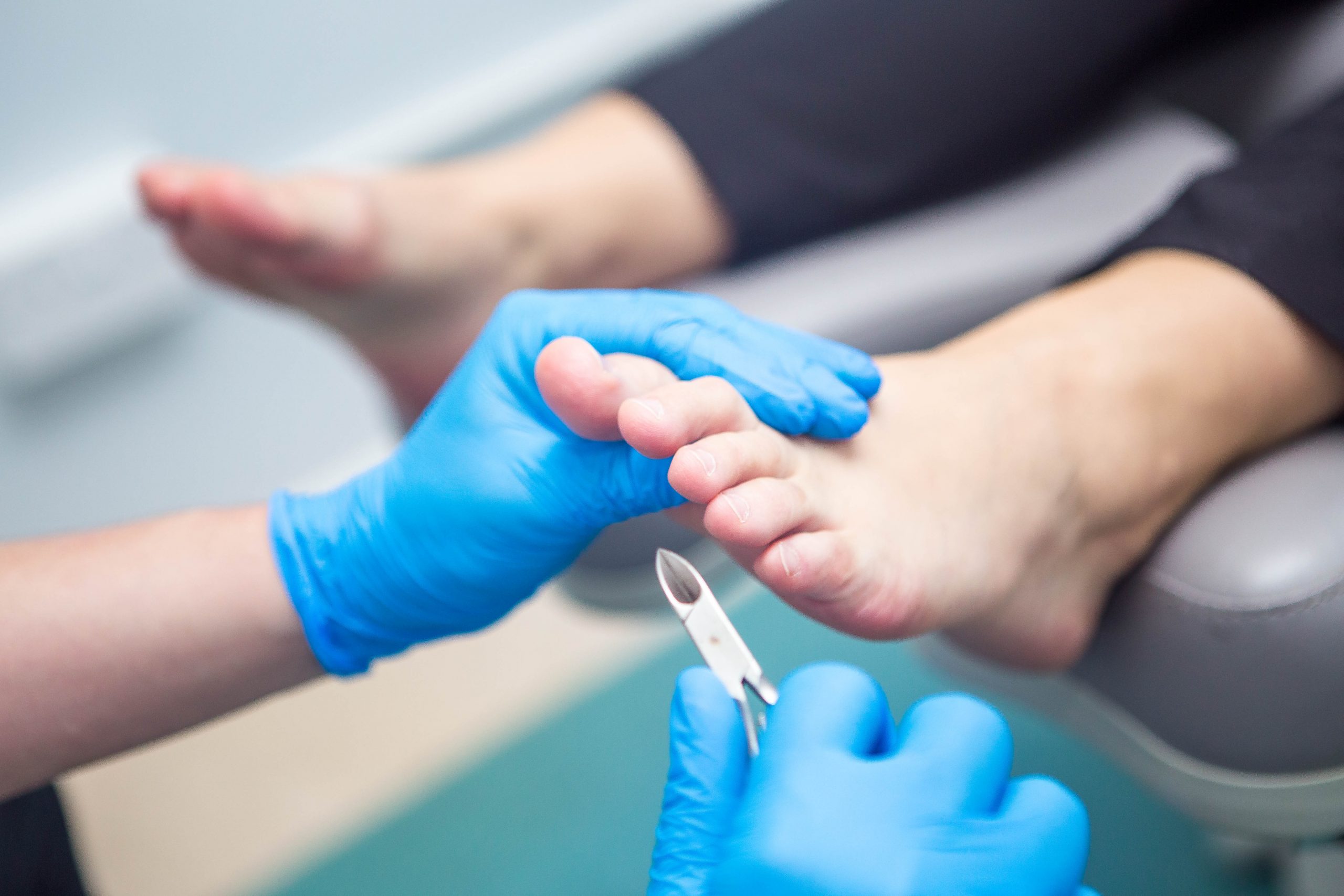
An ingrown toenail occurs when the edge of the nail grows into the surrounding skin. This can lead to pain, inflammation, and sometimes infection
Corns are small areas of thickened skin that develop due to repeated pressure or friction. They most commonly occur on the tops or sides of the toes and may become painful if pressure continues
Callus refers to areas of thickened skin that develop in response to repeated pressure or friction. Callus commonly forms on weight-bearing areas of the foot such as the heel or ball of the foot
Not sure which treatment you need? Get in touch and we'll help you find the right solution.